Thursday, June 9, 2016

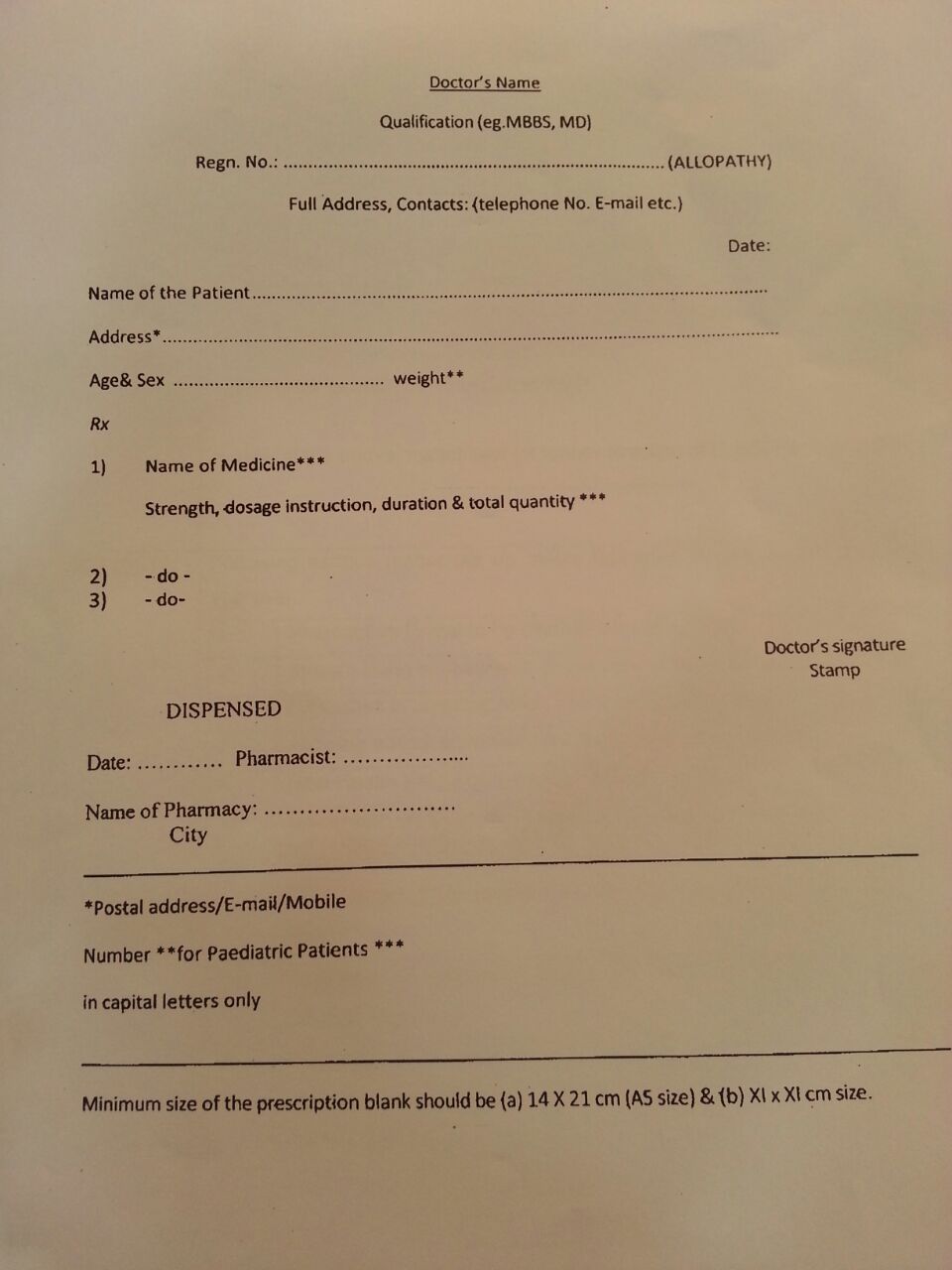
'Standard Prescription' MCI

Private Practice by Government Doctors


                                                                                                                     WIP(C)(PIL)No.01 of 2013
                                                                B E F O R E
                                HON’BLE THE CHIEF JUSTICE MR.DEEPAK GUPTA
                                                HON’BLE MR JUSTICE S. TALAPATRA
Present:
                For the petitioner                            : None
                For the respondents                        : Mr. B.C.Das, Adv.Gen
                                                                       Mr.S. Chakraborty, Addl.G.A.
29.05.2015
                We have perused the affidavits filed by the Chief Secretary as Well as the Secretary, Health.
As far as Generic Medicines are concerned we are fairly satisfied with the progress which has taken place and we expect that the Government should set up more and more shops.  We also request the Secretary, Health to examine the system of distribution of medicines being followed in the Sanjay Gandhi Post Graduate Institution of Medical Sciences, Lucknow whereby the department itself sells medicines at a nominal profit of 10 to 15 percent and as per our information so much revenue been generated that all poor patients are being provided medicines free of cost in that hospital.
As far as private practice is concerned from that affidavits of the Chief Secretary as well as the Secretary, Health it is more than obvious that the State was in a state  of deep slumber till orders were passed by this Court.  From the affidavits it is apparent that right from the time when the Rules were framed except in one case no action was ever taken in any case.  That too was a case of a Director, Health Services who was not permitted to do private practice,  No attempt was made by the State to ensure that Doctors permitted to do private practice charge fees as fixed by the State Govt.  It is apparent that no effort was made by the State to ensure that the Doctors permitted to do private practice adhere to the conditions laid down.  Even from the affidavit filed it is apparent that such Doctors are charging very heavy fees much more that the sum of Rs.50/- fixed by the Government.
We have in our order dated 2nd March, 2015 highlighted certain issues are thereafter on 30th March, 2015 we had passed another detailed order after referring to Rule 25 of the Tripura Health Service Rules (for short,   THS  Rules) which permits doctors to give an option of doing private practice.  We had, however, pointed out that the first, portion of the Rule clearly  envisages that private practice should be the exception and not the norm.  The aforesaid section also clearly lays down certain guidelines which must be followed.  It is more than obvious that nobody bothered to ensure that the mandate of the law as contained in Rule 25 of the THS Rules was being followed or not.
There is no use of crying over spilt milk and what has happened in the past has already happened.  What we have to ensure is that at least from now the Government keeps a check on the doctors who are permitted to do the private practices.  We are also clearly of the view that the Doctors who are permitted to carry on private practice do not do this in a manner which adversely affects their Governmental duties.  There are only 24 hours in a day.  A doctor is also a human being requiring sleep, time for the family, time to eat, time to bathe, time to rest, time to read newspapers or watch television, time to socialize time to enhance his knowledge by reading journals etc.  Since the State is still contemplating making certain guidelines, we direct that till the State frames any guidelines the following guidelines shall be followed:
(1)    Any doctor who applied for private practice and those doctors who are already doing private practice shall within one month from today submit an affidavit to the Head of the Department or to the Secretary, Health (as the Government may decide) stating therein the address at which they will conduct private practice and also the consultation fees which they will be charging from the private patients,  We are aware that the fees of Rs.50/- was fixed as far back as 1999 and we, therefore, permit till the Government takes a policy decision, the doctors to charge first time consultation fe3es up to a maximum of Rs.200/- per patient and subsequent fees shall not be more than Rs.100/- per patient.
(2)    We further direct that to ensure that a doctor who is permitted to engage in private practice shall not engage in such private practice for more than 3 (three) hours a day and in case of holidays for a maximum of 6 (six) hours in a day.  In the affidavit the doctors shall clearly set out the hours during which he will be available for private consultation.
(3)    We direct that as provided in the THS Rules, no doctor shall direct a patient who has come to the Govt. hospital to visit his private clinic or charge any fees from such patient.
(4)    The doctors permitted to do private practice shall maintain a detailed diary of their practice as envisaged in Rule 25 of the THS Rules in which they shall not only maintain the details of the patient attended to, they shall also enter the nature of the ailment, the nature of the treatment given  and the fees charged from such patient.  Every doctor shall give a receipt to every patient attended upon by him.
(5)    The timings, the fees, the hours etc. shall also be prominently displayed on a board in the chamber of the doctor.
(6)     We further direct that any doctor who is permitted to engage in private practice shall do his private practice only in his own chamber whether owned or rented by him but shall not sit in any poly clinic or private nursing home.  That is totally prohibited.  In the affidavit to be filed by the doctor, he shall also state that he is not associated with any nursing home, poly clinic or diagnostic clinic.
Whoever violates any of the aforesaid directions or the provisions of Rule 25 of the THS Rules the State must be dealt with severely.  The State must start disciplinary proceedings against such doctor for misconduct and the permission to engage in private practice shall be immediately cancelled by the State.
We direct the State to ensure that this order is immediately circulated amongst all the doctors who are permitted to engage in private practice and the affidavits in this regard are obtained latest by 31st July, 2015.  Thereafter, the matter be listed in Court on 17thAugust 2015 on which date the Chief Secretary and the Secretary, Health  shall both file their latest status report.
We against request the State of Tripura through the Chief Secretary to the State to seriously consider disbarring teaching doctors from private practice because these specialist doctors who have to teach in the hospitals not only have to attend to the patients in the hospital but they also have to spend a lot of time preparing their lectures.  The State should make available sufficient fund to compensate these doctors by paying them handsome Non Practicing Allowance.  The State must file an affidavit through the Chief Secretary giving reasons in support of its decision by the next date.

Monday, June 6, 2016

Court Ruling on Abortion for Rape Survivor is Reminder of Need to Amend the Law

The Supreme Court’s landmark verdict (July 2015) allowing a minor rape survivor to abort her more than 24-week-old foetus – following clearance for medical doctors – is likely to give a push to the proposed amendments to the Medical Termination of Pregnancy Act, 1971 which seek to allow termination of pregnancy beyond 20 weeks. The MTP Act allows abortions under a broad range of conditions up to 20 weeks of gestation or five months of pregnancy. The conditions under which termination of pregnancy is allowed include continuation of pregnancy posing a risk to the life of the pregnant woman or of grave injury to her physical or mental health; pregnancy caused by rape (presumed to constitute grave injury to mental health); pregnancy resulting from the failure of contraception used by a married woman or her husband; and a pregnancy in which there is substantial risk that the child, if born, would be seriously handicapped due to physical or mental abnormalities.
For termination of pregnancy between 12-20 weeks, the opinion of two Registered Medical Practitioners is required.
Proposed amendments
The Ministry of Health and Family Welfare in 2014 proposed to amend the MTP Act by increasing the gestation limit from 20 to 24 weeks for special categories of women (rape victims, women with disabilities – to be defined in the rules) and making first trimester abortions available on request by removing the requirement of a doctor’s approval up to 12 weeks of gestation.
Importantly, since certain foetal abnormalities that are incompatible with life are detected only after 20 weeks of gestation, the proposed amendments would address situations like the Nikita Mehta case by making provisions to allow for late term terminations in such cases.
“In my mind, the Supreme Court’s decision is a revalidation of the urgent need to amend the MTP Act, 1971. This young girl and her family have been brave to battle it out in courts but there would be many more such cases of girls and women who suffer in silence due to the current provisions of the law. The amendments proposed to the MTP Act include the clause of extending the gestation period for survivors of rape to 24 weeks, without the need to take recourse to Section 5 of the current MTP Act. Once the amendments to the MTP Act come through, girls and women would not be forced to move the highest court for a solution. I hope the Supreme Court’s judgment will help accelerate the passage of the amendments to the MTP Act, 1971 which have been deliberated on for half a decade,’’ says Vinoj Manning, Executive Director, Ipas India.
Section 5 of the MTP Act, 1971 allows for abortion beyond the stipulated time and at non-designated places when it is to be done immediately in order to save the life of the pregnant woman.
In the Nikita Mehta case, the child’s severe abnormal condition was detected only after 20 weeks of conception and she had approached Supreme Court to terminate the foetus as the law did not permit so. The Supreme Court, in her case, had disallowed the abortion. Mehta subsequently had a miscarriage.
Unsafe abortions as cause of maternal deaths
Though abortion has been legal in India for over 40 years now, every two hours a woman dies because of abortion related causes. Statistics unsafe abortions are the third largest cause of maternal deaths in India and account for 8% of maternal mortalities because women do not have access to safe abortion services.
One of the main reasons for women not receiving MTP services at site is non-availability of doctors. In comparison, mid-level providers (which include nurses, AYUSH doctors) are not only available at all levels of the health system but global experiences suggest that these cadres of trained providers can safely offer abortion services.
The National Population Policy, 2000 had also identified permitting mid-level providers to offer abortion services as one of the strategies to remove barriers to women’s access to safe abortion services.
At the time of the passage of the MTP Act in 1971, Dilation and Curettage (D&C) was the only available technology. Now, there are new technologies like manual vacuum aspiration (MVA) and medical methods of abortion (MMA) which are very safe.
Experts say there is no evidence that increasing the gestation limit for abortion leads to an increase in the abortion rate – a major argument used by those opposing the MTP amendments. Whether abortion is legally more restricted or available on request, a woman’s likelihood of having an unintended pregnancy and seeking induced abortion is about the same. However, legal restrictions, together with other barriers, mean many women induce abortion themselves or seek abortion from unskilled providers.
Global practice
Globally, out of 60 countries with abortion laws that specify a gestation limit within their law, 34 countries allow abortion anytime for more indications than saving the life of mother. These indications include foetal impairment, rape, economic and social reasons.
Ethiopia has a provision in its law for women who are victims of rape. No questions are asked in case a woman wants an abortion on grounds of rape or for minors who are unprepared for raising a child. In 2004, Ethiopia approved a new law which legally prohibits abortion but allows it under certain conditions including when the pregnancy results from rape or incest, in case of foetal abnormalities, for women with physical or mental disabilities and for minors who are physically or psychologically unprepared o raise a child.
The revised law establishes that poverty and other social factors may be grounds for reducing the criminal penalty for abortion and that in case of rape or incest, no proof is required beyond the women’s statement that it has occurred.
Who can perform abortions
Under the existing MTP Act provisions, an abortion can only be performed by a Registered Medical Practitioner (RMP), defined as: 
“a medical practitioner who possesses any recognised medical qualification as defined in clause (h) of section 2 of the Indian Medical Council Act, 1956, (102 of 1956) whose name has been entered in a State Medical Register and who has such experience or training in gynaecology and obstetrics as may be prescribed by rules made under this Act.”
The ministry’s proposed amendments will replace the requirement of an RMP with that of a Registered Health Care Provider (RHCP) – who could be a healthcare provider qualified under the Indian Medicine Central Council Act and entered into the Central Register or State Register of Indian Medicine (Ayurveda, Unani and Siddha), a qualified general nurse and a qualified auxiliary nurse midwife.
The proposal to allow persons other than just doctors to perform abortions has been criticised by the Indian Medical Association. “MTP is a procedure meant to be conducted by an allopathic doctor only and cannot be conducted by the paramedical staff on their own as they are not at all well equipped to handle critical medical conditions arising out of excessive bleeding especially during incomplete abortions as a result of procedures provided by unauthorised medical or paramedical professionals during and after MTPs,” Narendra Saini, head of the IMA, was quoted as saying.
While a section of the Indian medical community is suspicious of both non-allopathic systems and the notion that anyone less than a doctor can perform an abortion, the World Health Organisation (WHO) has said involving health workers can help reduce the number of deaths arising from the 22 million unsafe abortions that take place worldwide each year, almost all in low- and middle-income countries.
Adolescent girls and those who are poor, unmarried, less educated, and those who live in rural contexts are particularly at risk of unsafe abortion. Even though safe, simple, effective primary healthcare level interventions exist, many women still do not have access to them, placing their lives unnecessarily at risk.
The WHO has now  come up with a new guideline, ‘Health Worker roles in providing safe abortion care and post-abortion contraception’, that aims to help break down one critical barrier which limits access to safe abortion care – the lack of trained providers.
The WHO guideline is the first to make an evidence-based recommendation on the safety, effectiveness, feasibility and acceptability of involving a range of health workers in the delivery of recommended and effective interventions for providing safe abortion and post-abortion care, including post-abortion contraception.
In what appears to be a landmark judgement regarding the Medical Termination of Pregnancy beyond the stipulated 20 weeks for rape victims under the MTP Act, the Punjab and Haryana High Court has given some important directions. The background of the judgement comes after a minor rape victim approached the hon’ble court pleading Medical Termination of Pregnancy even after the legally stipulated 20 weeks, given her circumstances. As an interim decision gave the legal authority to the medical bo...

Read more at Medical Dialogues: Frame guidelines to remove fear of prosecution from doctors in certain MTP cases: HC to AIIMS http://medicaldialogues.in/frame-guidelines-to-remove-fear-of-prosecution-from-doctors-in-certain-mtp-cases-hc-to-aiims/

In what appears to be a landmark judgement regarding the Medical Termination of Pregnancy beyond the stipulated 20 weeks for rape victims under the MTP Act, the Punjab and Haryana High Court has given some important directions. The background of the judgement comes after a minor rape victim approached the hon’ble court pleading Medical Termination of Pregnancy even after the legally stipulated 20 weeks, given her circumstances. As an interim decision gave the legal authority to the medical bo...

Read more at Medical Dialogues: Frame guidelines to remove fear of prosecution from doctors in certain MTP cases: HC to AIIMS http://medicaldialogues.in/frame-guidelines-to-remove-fear-of-prosecution-from-doctors-in-certain-mtp-cases-hc-to-aiims/


Monday, May 16, 2016

New cerebrospinal fluid test to tell time of death

Ahmedabad: Ascertaining the time of death is crucial in several criminal cases as that can corroborate several aspects of crime such as presence of suspects, circumstances in which someone died, motive and so on. Forensic experts keep developing methods of determining time of death because the same method cannot be applied to all cases. Factors such as decomposition (or preservation) of the body, temperature and humidity among others have a bearing on the what investigators conclude to be the time of death.

Researchers of Gujarat University's department of forensic science have proposed a new method in a paper published recently. The paper titled, 'Estimation of postmortem interval through albumin in CSF by simple dye binding method' recently appeared in the international journal, 'Science and Justice'. Ankita Parmar, a masters student of the department, along with head of the forensic science department, Shobhana Menon, analysed changes in albumin - a protein - from the cerebro-spinal fluid (CSF) to come to an estimate about the time of death.

The researchers claim that the method can estimate the time of death to within 1 to 4 hours of the actual time of death in bodies deceased for up to 72 hours.

Menon said that for the project, they collected CSF from 100 cadavers brought to Civil Hospital in Ahmedabad for autopsy.

"The CSF lies in close proximity to the brain and hence reflects changes occurring there. Another advantage is, fluid is well-protected in the skull even during severe accidents and, thus, it is less affected by putrefaction. Therefore, CSF is widely used for chemical analysis while estimating the time of death," said Menon.

MCI cracks the whip on ghost faculty

MCI has resorted to taking strict measures against the medical colleges and the doctors-who pose as ghost faculty, during inspection visit to colleges. A penalty can be imposed on such doctors, on the grounds of misleading and supplying incorrect information.
The decision was taken in the last meeting of MCI executive committee recently. It also has also written to state governments, to not allow any transfer of faculty from one college to another, for the purpose of MCI assessments. The council implied this in context of transferring of faculty (from one college to another) for filling up faculty positions during the assessment.
MCI has also suggested that the name of Dean, HOD, and the doctor concerned, involved in such malpractices, be removed from the Indian Medical Register (IMR) for a year.
A heavy punishment is likely to be imposed for showing fake documents, or in case of posing a non-medical person as a medical teacher or resident. If it happens during the assessment, then Dean, HOD, doctor, and the resident concerned will be removed from IMR for three years. Besides, an FIR will be filed against the person for posing as faculty.
The aforementioned situation in all its probability is likely to pose difficulties for district level medical colleges and general hospitals in any state. As implied in a media report, more often than not the state government is challenged by these factors i.e. shortage of faculty, or lack of infrastructure. It is exactly during this time, when the government resorts to redeploying staff from one college to another, temporarily during MCI inspection.
A doctor may also be censored from the services, as in a case of maximum punishment given for the offence. A case in 2012, led to removal of 32 doctors in a private medical college in Tamil Nadu by MCI. They were removed for 3-5 years from the State and national medical registers.
“The MCI has made it clear that the norms would be no different for government doctors. Not just the doctors who are transferred, but the Director of Medical Education (DME) who issues the transfer orders or “temporary redeployment orders” for the purpose of managing MCI assessments in medical colleges could face penalty,” a senior doctor and health activist pointed out to the Hindu.
A similar incident was reported in Idukki and Palakkad government medical colleges last year, when the state of Tamil Nadu was on the verge of losing 150 seats. However, it was only after the intervention of the health ministry, on request of the state government to give it more time to address the shortage, did the matter get sorted.

How Medical Representatives lure doctors : Gujrat Study

When around 150 physicians were interviewed, more interesting facts came to light. These include:-
  • 71%  doctors said that sometimes MRs tried to persuade them on to make irrational prescriptions.
  • Nearly 82% of the doctors believed that MRs concealed vital facts such as major adverse effects (99%).
  • Around 64% of the doctors believed that refusal of freebies and drug samples can reduce prices of drugs.
  • 98% of the respondent doctors did not know of ethical guidelines for drug promotion.
  • 89% of the doctors interview expressed their total dependency on the MR for information about the drugs, yet  75% of the doctors  believed there to be a discrepancy prevailing in what was said and what was the truth in actual practice when it came to  efficacy of drugs.                  Source

Thursday, May 5, 2016

Supreme Court Clips MCI Wings, Appoints Panel To Monitor

NEW DELHI: Saying the Medical Council of India (MCI) had "repeatedly" failed in its duties and the quality of medical education in the country was at its "lowest ebb", the Supreme Court on Monday appointed a high-powered committee headed by former CJI R M Lodha to clean up the system by taking over the functions of MCI.

"The medical graduates lack competence in performing basic health care tasks. Instances of unethical practices continued to grow. The MCI was not able to spearhead any serious reforms in medical education. The MCI neither represented the professional excellence nor its ethos," said Justice A K Sikri, who wrote the judgment for the five-judge Constitution bench comprising justices A R Dave, R K Agrawal, A K Goel and R Banumathi. The system keeps out most meritorious and underprivileged students, the bench said.

The order signals the end of the road for MCI that has been in the midst of controversies since its president Ketan Mehta was arrested in a corruption case. The government has been actively considering scrapping MCI in its present form.

The court asked the oversight committee, also comprising retired comptroller and auditor general Vinod Rai and eminent doctor Shiva Sareen, to oversee all statutory functions under the MCI Act and said policy decisions would require the panel's approval. The committee will function till the Centre puts in place a new mechanism for regulation by amending the statute or bringing a new legislation.

The court said deep-rooted corruption is prevalent in MCI and its members, coming from commercialised corporate private hospitals, were also found indulging in unethical practices such as carrying out unnecessary diagnostic tests and surgical procedures to extract money from hapless patients. It said the law needs to be amended as the Centre has no power under the present system to disagree with MCI and give policy directives to the regulatory body.

"The existing system of graduate medical education is required to be re-invented. The admission process was not satisfactory as majority of seats in private medical colleges were being allotted for capitation fee. The system keeps out most meritorious and underprivileged students," the bench said.

A day before the Supreme Court is to hear the controversy on a national eligibility test (NEET), the Constitution bench strongly batted for a common entrance test by scrapping exams conducted by private medical colleges. It said that common window test would tackle the menace of capitation fee and bring transparency in the admission process.

The court passed the order on a bunch of petitions filed by private unaided medical colleges of Madhya Pradesh challenging the validity of state legislation to bring into force Common Entrance Test (CET) for all medical institutions and regulate fee structure for medical education.

 Dismissing their plea, the bench said the state government was justified to regulate education to ensure that merit could not be compromised in admissions to professional institutions nor capitation fee could be permitted. "The Constitution is primarily for the common man. Larger interest and welfare of student community to promote merit, achieve excellence and curb malpractices, fee and admissions can certainly be regulated," the bench said.


"It is to be borne in mind is that the occupation of education cannot be treated at par with other economic activities. In this field, the State cannot remain a mute spectator and has to necessarily step in in order to prevent exploitation, privatization and commercialisation by the private sector," the bench said.
timesofindia  SC-clips-MCIs-wings-sets-up-ex-CJI-headed-panel-to-regulate-medical-education

Endorsing a Parliamentary Standing Committee report of March 2016 that medical education and profession in the country is at its 'lowest ebb' and suffering from 'total system failure' due to corruption and decay, the Supreme Court has used its rare and extraordinary powers under the Constitution to set up a three-member committee, headed by a former Chief Justice of India, to oversee the functioning of the Medical Council of India (MCI) for at least a year. A Constitution Bench, led by a Justice in a 165-page judgment, said that the apex court was constrained to exercise its extraordinary powers under Article 142 of the Constitution as the government had not acted on the report of the Parliamentary Standing Committee on Health and Family Welfare. Its report on 'The functioning of the Medical Council of India, was tabled in Parliament on March 8, 2016. The judgment referred to the parliamentary panel report, which described the MCI as an 'ossified and opaque body' unable to cope with the 'humongous' task of managing medical education in over 400 colleges across the country.

Read more at: https://www.docplexus.in/#/app/posts/800d3a22-1064-4fbb-8055-fa76dd5bcacc?utm_term=Email-Digest-0-morn&utm_campaign=Email-Digest&utm_medium=Email&utm_source=Docplexus.in&utm_content=CTA
Copyright 2016 © Docplexus
Endorsing a Parliamentary Standing Committee report of March 2016 that medical education and profession in the country is at its 'lowest ebb' and suffering from 'total system failure' due to corruption and decay, the Supreme Court has used its rare and extraordinary powers under the Constitution to set up a three-member committee, headed by a former Chief Justice of India, to oversee the functioning of the Medical Council of India (MCI) for at least a year. A Constitution Bench, led by a Justice in a 165-page judgment, said that the apex court was constrained to exercise its extraordinary powers under Article 142 of the Constitution as the government had not acted on the report of the Parliamentary Standing Committee on Health and Family Welfare. Its report on 'The functioning of the Medical Council of India, was tabled in Parliament on March 8, 2016. The judgment referred to the parliamentary panel report, which described the MCI as an 'ossified and opaque body' unable to cope with the 'humongous' task of managing medical education in over 400 colleges across the country. Unethical practices up

Read more at: https://www.docplexus.in/#/app/posts/800d3a22-1064-4fbb-8055-fa76dd5bcacc?utm_term=Email-Digest-0-morn&utm_campaign=Email-Digest&utm_medium=Email&utm_source=Docplexus.in&utm_content=CTA
Copyright 2016 © Docplexus
Endorsing a Parliamentary Standing Committee report of March 2016 that medical education and profession in the country is at its 'lowest ebb' and suffering from 'total system failure' due to corruption and decay, the Supreme Court has used its rare and extraordinary powers under the Constitution to set up a three-member committee, headed by a former Chief Justice of India, to oversee the functioning of the Medical Council of India (MCI) for at least a year. A Constitution Bench, led by a Justice in a 165-page judgment, said that the apex court was constrained to exercise its extraordinary powers under Article 142 of the Constitution as the government had not acted on the report of the Parliamentary Standing Committee on Health and Family Welfare. Its report on 'The functioning of the Medical Council of India, was tabled in Parliament on March 8, 2016. The judgment referred to the parliamentary panel report, which described the MCI as an 'ossified and opaque body' unable to cope with the 'humongous' task of managing medical education in over 400 colleges across the country. Unethical practices up

Read more at: https://www.docplexus.in/#/app/posts/800d3a22-1064-4fbb-8055-fa76dd5bcacc?utm_term=Email-Digest-0-morn&utm_campaign=Email-Digest&utm_medium=Email&utm_source=Docplexus.in&utm_content=CTA
Copyright 2016 © Docplexus
Endorsing a Parliamentary Standing Committee report of March 2016 that medical education and profession in the country is at its 'lowest ebb' and suffering from 'total system failure' due to corruption and decay, the Supreme Court has used its rare and extraordinary powers under the Constitution to set up a three-member committee, headed by a former Chief Justice of India, to oversee the functioning of the Medical Council of India (MCI) for at least a year. A Constitution Bench, led by a Justice in a 165-page judgment, said that the apex court was constrained to exercise its extraordinary powers under Article 142 of the Constitution as the government had not acted on the report of the Parliamentary Standing Committee on Health and Family Welfare. Its report on 'The functioning of the Medical Council of India, was tabled in Parliament on March 8, 2016. The judgment referred to the parliamentary panel report, which described the MCI as an 'ossified and opaque body' unable to cope with the 'humongous' task of managing medical education in over 400 colleges across the country. Unethical practices up "Quality of medical education is at its lowest ebb, the right type of health professionals were not able to meet the basic health needs of the country. Products coming out of medical colleges are ill-prepared to serve in poor resource settings like Primary Health Centres. Graduates lacked competence in performing basic health care tasks. Unethical practices continued to grow. The MCI was not able to spearhead any serious reforms in medical education" the judgment said, citing the panel report. 'The MCI neither represented the professional excellence nor its ethos under the MCI Act' said a Justice who authored the judgment for the Bench, referring to the Parliamentary panel report. Besides Justice (retired) Lodha, the committee has Professor who is the Director of Institute of Liver and Biliary Sciences and a former Comptroller & Auditor General of India. The Supreme Court said the Justice Lodha committee "will have the authority to oversee all statutory functions under the MCI Act. All policy decisions of the MCI will require approval of the Oversight Committee. The Committee will be free to issue appropriate remedial directions. The Committee will function till the Central Government puts in place any other appropriate mechanism after due consideration of the Expert Committee Report." The court referred to how the Centre had set up the Dr. Ranjit Roy Chaudhury expert panel in July 2014 to study the Indian Medical Council Act, 1956 and make recommendations. No action taken Though the committee did submit its report in September the same year, no action was taken on the reforms suggested by it, including overseeing undergraduate and postgraduate medical education. Unethical practices Medical professionals indulge in unethical practices conducting unnecessary diagnostics tests and surgical procedures in order to extract money from hapless patients, the judgment said. "The challenges facing medical education of the 21st Century are truly gigantic... Game changer reforms of transformational nature are therefore the need of the hour and they need to be carried out urgently and immediately" it said.

Read more at: https://www.docplexus.in/#/app/posts/800d3a22-1064-4fbb-8055-fa76dd5bcacc?utm_term=Email-Digest-0-morn&utm_campaign=Email-Digest&utm_medium=Email&utm_source=Docplexus.in&utm_content=CTA
Copyright 2016 © Docplexus
Endorsing a Parliamentary Standing Committee report of March 2016 that medical education and profession in the country is at its 'lowest ebb' and suffering from 'total system failure' due to corruption and decay, the Supreme Court has used its rare and extraordinary powers under the Constitution to set up a three-member committee, headed by a former Chief Justice of India, to oversee the functioning of the Medical Council of India (MCI) for at least a year. A Constitution Bench, led by a Justice in a 165-page judgment, said that the apex court was constrained to exercise its extraordinary powers under Article 142 of the Constitution as the government had not acted on the report of the Parliamentary Standing Committee on Health and Family Welfare. Its report on 'The functioning of the Medical Council of India, was tabled in Parliament on March 8, 2016. The judgment referred to the parliamentary panel report, which described the MCI as an 'ossified and opaque body' unable to cope with the 'humongous' task of managing medical education in over 400 colleges across the country. Unethical practices up "Quality of medical education is at its lowest ebb, the right type of health professionals were not able to meet the basic health needs of the country. Products coming out of medical colleges are ill-prepared to serve in poor resource settings like Primary Health Centres. Graduates lacked competence in performing basic health care tasks. Unethical practices continued to grow. The MCI was not able to spearhead any serious reforms in medical education" the judgment said, citing the panel report. 'The MCI neither represented the professional excellence nor its ethos under the MCI Act' said a Justice who authored the judgment for the Bench, referring to the Parliamentary panel report. Besides Justice (retired) Lodha, the committee has Professor who is the Director of Institute of Liver and Biliary Sciences and a former Comptroller & Auditor General of India. The Supreme Court said the Justice Lodha committee "will have the authority to oversee all statutory functions under the MCI Act. All policy decisions of the MCI will require approval of the Oversight Committee. The Committee will be free to issue appropriate remedial directions. The Committee will function till the Central Government puts in place any other appropriate mechanism after due consideration of the Expert Committee Report." The court referred to how the Centre had set up the Dr. Ranjit Roy Chaudhury expert panel in July 2014 to study the Indian Medical Council Act, 1956 and make recommendations. No action taken Though the committee did submit its report in September the same year, no action was taken on the reforms suggested by it, including overseeing undergraduate and postgraduate medical education. Unethical practices Medical professionals indulge in unethical practices conducting unnecessary diagnostics tests and surgical procedures in order to extract money from hapless patients, the judgment said. "The challenges facing medical education of the 21st Century are truly gigantic... Game changer reforms of transformational nature are therefore the need of the hour and they need to be carried out urgently and immediately" it said.

Read more at: https://www.docplexus.in/#/app/posts/800d3a22-1064-4fbb-8055-fa76dd5bcacc?utm_term=Email-Digest-0-morn&utm_campaign=Email-Digest&utm_medium=Email&utm_source=Docplexus.in&utm_content=CTA
Copyright 2016 © Docplexus

About Me